
What’s Really in Your Food? Simple Guide to Preservatives, Colours, Sweeteners & More
Food regulations in most countries, including the US (FDA), the EU (EFSA), and India (FSSAI) require manufacturers to list every ingredient in descending order of weight. The ingredient present in the largest quantity appears first. Learning to read that list is the single most empowering habit you can build as a consumer.
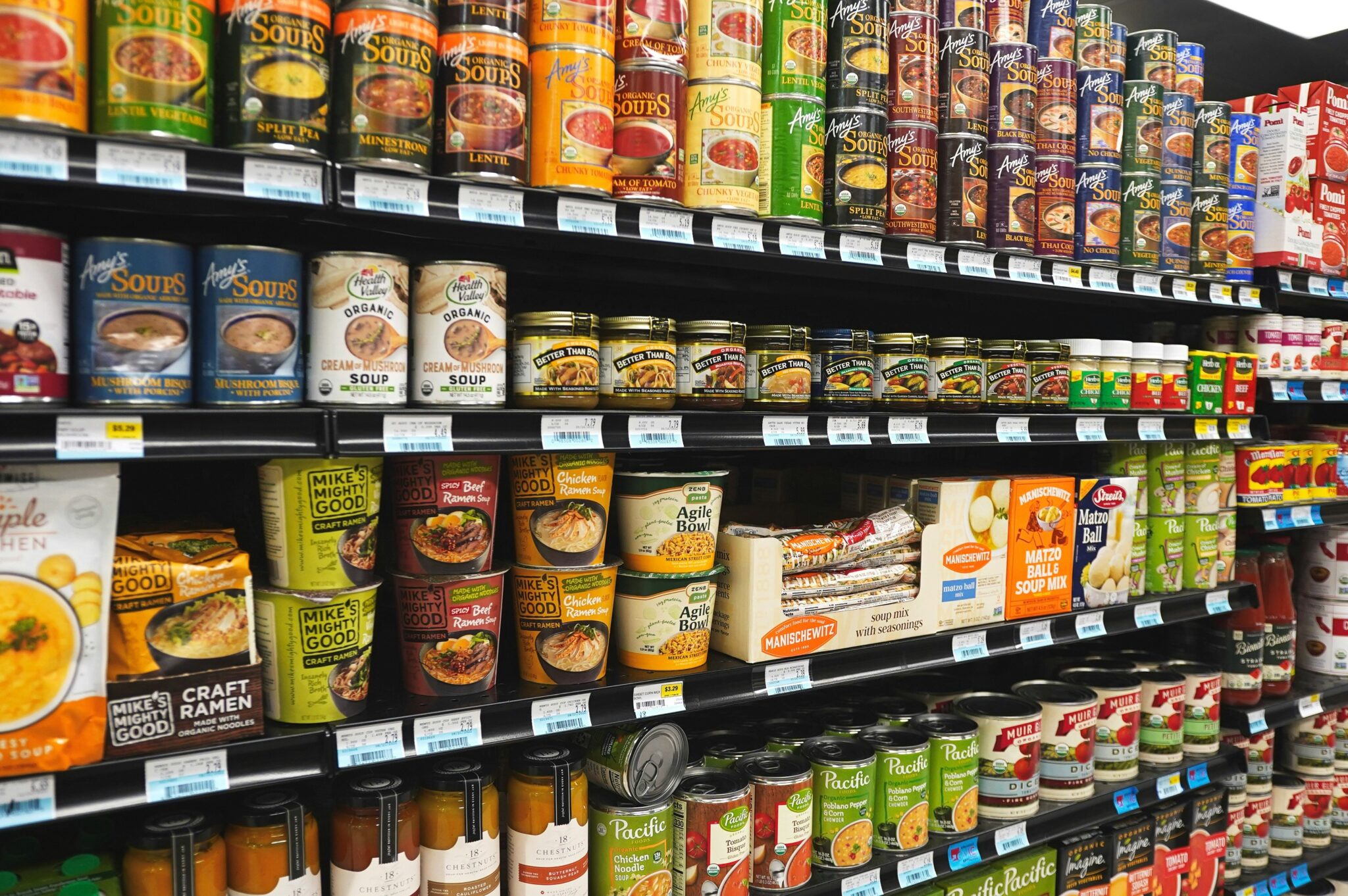
You pick up a packet of biscuits, flip it over, and confront a wall of text: sodium benzoate, tartrazine, acesulfame potassium, soy lecithin, carrageenan. It reads like a chemistry exam. Most of us scan past it and move on, but every one of those names has a job, a regulatory file, and a safety story.
Why Are Additives in Food in the First Place?
Before additives were a regulatory category, they were simply a survival tool. Salt, smoke, vinegar, and sugar have been used for centuries to stop food from spoiling.
The modern additive system formalised that idea: any substance intentionally added to food to perform a technological function preserving it, colouring it, thickening it is considered a food additive.Today, more than 3,000 substances are used as food additives, with salt, sugar, and corn syrup being by far the most widely used in the US alone.
In the European Union, more than 300 substances are authorised for use as food additives, each assigned an “E number” that must appear on the label along with the additive’s function for example, “E 211 (preservative)” or “E 102 (colour).”
Before any additive reaches your food, it undergoes a safety evaluation. Regulatory bodies like the FDA in the US, EFSA in Europe, and FSSAI in India assess toxicological data before granting approval.
A central concept in this process is the Acceptable Daily Intake (ADI) — an estimate of the amount of a substance in food or drinking water that can be consumed daily over a lifetime without presenting an appreciable risk to health, expressed as milligrams of the substance per kilogram of body weight.
1. Preservatives : Keeping Food Safe Longer
Preservatives are arguably the most misunderstood category of additives. They are also, in many cases, a genuine food safety tool. Preservatives slow product spoilage caused by mould, air, bacteria, fungi, or yeast. In addition to maintaining food quality, they help control contamination that can cause foodborne illness, including life-threatening botulism.
What to look for on the label: Preservatives are usually listed by name or E number followed by their function e.g., “preservative (sodium benzoate).” If you are managing a sensitivity or following a specific dietary protocol, this category is worth paying close attention to.
Common preservatives and where you’ll find them
Sodium benzoate (E 211) is one of the most widely used. It appears in carbonated soft drinks, fruit juices, and condiments. At approved levels it is classified as Generally Recognized as Safe (GRAS) by the FDA.
when sodium benzoate is combined with ascorbic acid (vitamin C) in acidic drinks, the two can react to form small amounts of benzene. Regulatory agencies continue to monitor this, but concentrations found in commercial products have consistently been well below levels of concern.
Nitrites and nitrates (E 249–E 252) are used in cured meats like ham and bacon to prevent the growth of Clostridium botulinum and to maintain the characteristic pink colour. EFSA has been actively re-evaluating these compounds in recent years, with particular attention to the formation of nitrosamines during high-heat cooking.
Sorbates (potassium sorbate, E 202) are widely used in baked goods, cheese, and wine. They are considered among the safer preservatives in the regulatory toolkit and have a long history of use.
BHA and BHT are synthetic antioxidant preservatives that prevent fats and oils from going rancid. BHT (butylated hydroxytoluene) and BHA (butylated hydroxyanisole) are antioxidants that help maintain the appeal and wholesome qualities of food by retarding rancidity in fats, oils, and fat-containing foods.
Their long-term safety continues to be studied; some international bodies have expressed caution, while the FDA currently lists both as GRAS.
2. Colour Additives: What Gives Food Its Hue
Colour additives serve a primarily aesthetic function: they restore colour lost during processing, enhance existing colour, or make foods look more uniform and appealing.
The label must list the names of any FDA-certified colour additives (for example, FD&C Blue No. 1 or the abbreviated name, Blue 1), but some ingredients can be listed collectively as “artificial colours” without naming each one, a labeling nuance worth knowing.
Two categories: certified and exempt
Certified (synthetic) colours — such as tartrazine (Yellow 5 / E 102), Allura Red (Red 40 / E 129), and Brilliant Blue (Blue 1) — are petroleum-derived dyes that undergo batch-by-batch certification. In the EU, foods containing six specific azo dyes (the “Southampton Six”) must carry a warning: “may have an adverse effect on activity and attention in children.”
This requirement was introduced following a 2007 Southampton University study linking the dye mixture to hyperactivity in some children. The FDA reviewed the same evidence and concluded that a general causal link had not been established, but continues to monitor the research.
Exempt (natural) colours — such as annatto (E 160b), beetroot red (E 162), caramel colour (E 150), paprika extract, and turmeric — come from natural sources and are exempt from batch certification. However, “natural” does not automatically mean without risk; some individuals show sensitivity to annatto, for instance.
In 2021, EFSA concluded that titanium dioxide (E 171), a white colouring agent used in sweets and chewing gum, can no longer be considered safe when used as a food additive, primarily because genotoxicity concerns could not be ruled out. It has since been banned in the EU, though it remains under review in other jurisdictions.
3. Sweeteners: The Sugar Alternatives
Sweeteners divide into two broad camps: nutritive sweeteners (which provide calories) and non-nutritive sweeteners (which provide little to no caloric value).

Non-nutritive sweeteners:
Aspartame (E 951) is one of the most extensively studied food chemicals in history. In July 2023, IARC classified it as “possibly carcinogenic to humans” (Group 2B) but critically, this classification reflects the strength of evidence, not the level of risk at normal consumption. JECFA reaffirmed the acceptable daily intake of 40 mg/kg body weight, concluding that it is safe for a person to consume within this limit per day. For example, with a can of diet soft drink containing 200–300 mg of aspartame, an adult weighing 70 kg would need to consume more than 9–14 cans per day to exceed the acceptable daily intake.
Acesulfame K (E 950) was re-evaluated by EFSA in 2025. EFSA raised the acceptable daily intake (ADI) for the compound to 15 milligrams per kilogram of bodyweight per day, replacing the previous ADI of 9 mg/kg BW/day.
Erythritol (E 968) — a sugar alcohol increasingly used in “keto” and “zero-sugar” products — received renewed scrutiny. EFSA lowered the acceptable daily intake for erythritol to 0.5 grams per kilogram of bodyweight per day, set as protection from the immediate laxative effect of erythritol but also from any potential adverse long-term effects, secondary to diarrhoea, such as electrolyte imbalance.
Sucralose, saccharin, and steviol glycosides are also widely used. Their regulatory profiles differ; if you consume sweetened products regularly, it is worth checking which sweetener is present and at what levels.
4. Emulsifiers: The Peacemakers Between Oil and Water
Oil and water do not mix naturally, emulsifiers solve this problem by sitting at the interface between fat and water molecules, keeping them in stable suspension. Without them, your salad dressing would separate in seconds, your chocolate would bloom, and your ice cream would feel grainy.
Emulsifiers allow smooth mixing of ingredients, prevent separation, keep emulsified products stable, reduce stickiness, control crystallisation, keep ingredients dispersed, and help products dissolve more easily. They appear in salad dressings, peanut butter, chocolate, margarine, and frozen desserts.
Common emulsifiers include soy lecithin (E 322), sunflower lecithin, mono- and diglycerides of fatty acids (E 471), and carrageenan (E 407). Lecithins are generally well-tolerated. Carrageenan, derived from red seaweed, has been the subject of ongoing scientific debate — some animal studies have raised concerns about gut inflammation at high doses, though regulatory agencies have not moved to ban it at current permitted levels in human food.
5. Stabilisers, Thickeners & Gelling Agents
These additives give food its expected texture and prevent it from separating or becoming watery over time. Stabilisers and thickeners produce uniform texture and improve “mouth-feel” in frozen desserts, dairy products, cakes, pudding and gelatin mixes, dressings, jams and jellies, and sauces.
You will commonly see xanthan gum (E 415), guar gum (E 412), pectin (E 440), agar (E 406), carob bean gum (E 410), and modified starches in this category. Most are derived from plant or microbial sources and have well-established safety profiles. They are generally inert in the digestive system and pass through largely unabsorbed, though high doses of some gums can cause digestive discomfort in sensitive individuals.
6. Flavour Enhancers — Turning Up the Umami
Flavour enhancers do not add a new flavour; they amplify the existing flavours in a food, making it taste more savoury, rounded, or intense. The most well-known is monosodium glutamate (MSG / E 621), which has been the subject of intense public debate since the 1960s. Both the FDA and EFSA classify MSG as safe at normal dietary levels. The glutamate in MSG is chemically identical to the glutamate found naturally in tomatoes, parmesan cheese, and soy sauce.
Other flavour enhancers include disodium inosinate (E 631) and disodium guanylate (E 627), which are often used in combination with MSG for a synergistic effect.
7. Anti-Caking Agents, Acids & Acidity Regulators
A few more categories that appear frequently on labels:
Anti-caking agents — such as silicon dioxide (E 551) and sodium aluminosilicate — keep powdered products like table salt, icing sugar, and powdered milk free-flowing. They are used in tiny quantities.
Acidity regulators and food acids — including citric acid (E 330), lactic acid (E 270), and phosphoric acid (E 338) — control pH in products ranging from soft drinks to processed cheese. Citric acid, the most common of these, occurs naturally in citrus fruit and is widely regarded as safe.
How to Read an Ingredient Label: A Practical Checklist
The Bottom Line
Food additives are not inherently unsafe, nor are they inherently safe simply because they carry regulatory approval. The science is dynamic — safety assessments are updated, ADIs are revised, and some additives are removed from approved lists as new evidence emerges (as happened with titanium dioxide in the EU).
The most reliable habit is to read the ingredient list rather than rely on front-of-pack marketing claims. Terms like “natural,” “clean label,” or “no artificial additives” are not standardised regulatory categories they are marketing language. The ingredients list, by contrast, is a legal document.
At CheckTheLabels.com, our mission is to make that list readable. Search any additive in our database to find its approved uses, regulatory status, known safety data, and common food sources cited from FDA, EFSA, FSSAI, and WHO sources.
Data referenced in this article is sourced from the U.S. Food and Drug Administration (FDA), the European Food Safety Authority (EFSA), the Joint FAO/WHO Expert Committee on Food Additives (JECFA), and the International Agency for Research on Cancer (IARC). All regulatory positions cited reflect publicly available official statements.
One Comment