
What is Lecithins (E322)?
Last updated on: 12/28/2025
Sources: WHO, US-FDA, EFSA, FSSAI.
9
/10
Low Concern
Generally safe at authorized levels, long history of stable use, approved by all major regulators.
CTL SAFETY SCORE
A higher score reflects higher confidence in safety; it is based on regulatory approvals, intake limits, and individual sensitivities data.
Lecithin is a naturally occurring fat (phospholipid) used mainly as an emulsifier; it helps oil and water mix smoothly. It is commonly derived from soy, sunflower, egg yolk, or rapeseed and used in Chocolate, baked goods, etc.
Safety Summary
- It is a naturally occurring, heat-stable emulsifier approved by all major regulatory authorities worldwide.
- No sensitivity groups identified by the European food safety authority (EFSA).
- Long history of safe and stable use.
- No specific average daily intake is provided by EFSA, FDA and WHO (approved under good manufacturing practice).
Who should be cautious?
None identified by EFSA under dietary exposure
Quick Facts
|
E-Number : |
E322 |
|
INS Number : |
INS-322 |
|
Category : |
Emulsifier |
|
Sub-category : |
Antioxidant ,Flour treatment agent |
|
Origin : |
Naturally occurring (commercially produced) |
|
Used In : |
Food |
|
Alternative Names : |
322, Phospholipids |
|
Similar Ingredients : |
Common Products
Due to its good emulsification properties, you will find it in the following products:
- Chocolate,
- Baked goods,
- Margarine,
- Salad dressings,
- Frozen battered fish,
- Vegetable oils and fats, etc.
Example of how this ingredient may appear on food labels. Label formats vary by product and country:
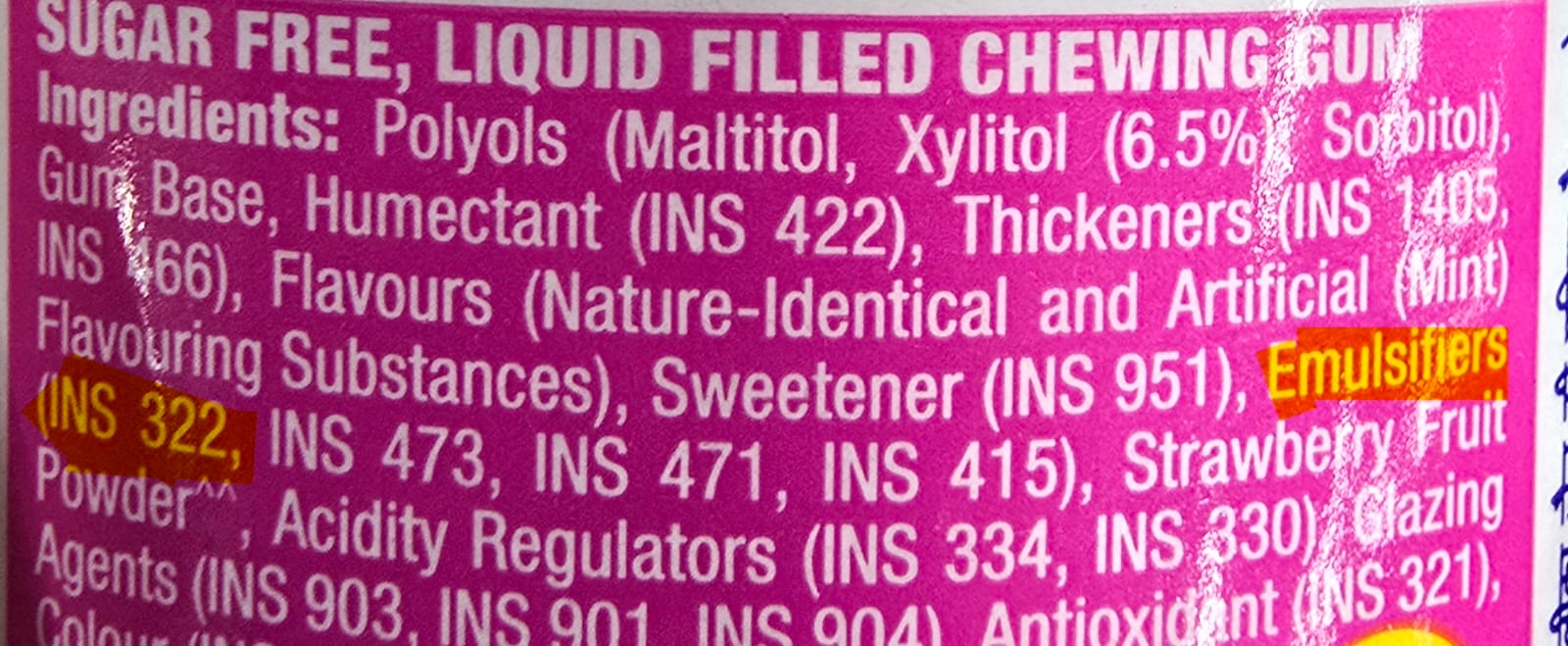
Image source: reader submissions
Regulatory Approval.
1. Food and drug administration (fDA – USA)
Status |
Usage Limit |
|---|---|
|
Approved (GRAS under Good Manufacturing Practice) |
Used in food consistent with Good Manufacturing Practice; no specific numerical limit beyond GMP. |
2. European Food Safety authority (eFSA)
Status |
Usage Limit |
|---|---|
|
Approved |
Not specified (ADI not required). Use is controlled through authorized food categories and maximum permitted levels. |
3. Food safety and standardization authority India (FSSAI)
Status |
Usage Limit |
|---|---|
|
Approved (subject to specified maximum levels in food categories) |
Permitted in defined food categories; category-wise maximum use levels (mg/kg or mg/L) listed in FSSAI schedules (aligned with Codex/Food Regulation limits) |
Health concerns
- EFSA reviewed toxicological, genotoxicity, sub-chronic, chronic, reproductive, and developmental data. The panel did not identify any safety concerns related to the use of lecithins as a food additive at reported use levels.
- No evidence of genotoxicity or carcinogenicity was identified.
- Lecithin is well tolerated by the general population.
Conclusions
Lecithin is an emulsifier that is heat-stable, widely used, and accepted by all major regulators. It shows no specific sensitivity to any group when used in regulatory limits.