
What is Aspartame (E951)?
Last updated on: 12/25/2025
Sources: WHO, US-FDA, EFSA, FSSAI.
6
/10
Moderate Concern
Generally safe within the ADI for most people, but individuals with phenylketonuria (PKU), a rare genetic condition, must avoid it.
CTL SAFETY SCORE
A higher score reflects higher confidence in safety; it is based on regulatory approvals, intake limits, and individual sensitivities data.
Aspartame (E951) is a high-intensity and low-calorie artificial sweetener used to provide sweetness without the calories of sugar. It’s often referred to as 200 times sweeter than sugar. It is one of the most controversial sweeteners but is approved by all major regulators worldwide under specified limits.
Safety Summary
- Approved by all major regulatory bodies worldwide under specified limits.
- US regulation permits aspartame as a sweetener/flavor enhancer under good manufacturing practice.
- The International Agency for Research on Cancer (IARC) classified aspartame as “possibly carcinogenic” based on limited evidence, but the WHO/JECFA did not change the average daily intake limit (ADI), stating the evidence was not enough.
- Sensitive individuals with phenylketonuria (PKU) are the primary exception and must avoid it.
- Intake monitoring is advised for children, especially if they consume different products with other sweeteners, as average daily intake may exceed recommended levels.
Who should be cautious?
Individuals with phenylketonuria (PKU)
Quick Facts
|
E-Number : |
E951 |
|
INS Number : |
INS-951 |
|
Category : |
Sweetener |
|
Sub-category : |
Flavour Enhancer |
|
Origin : |
Synthetic (Chemically derived) |
|
Used In : |
Food |
|
Alternative Names : |
951, Aspartame sweetener, 3-(L-α-Aspartyl)-L-phenylalanine 1-methyl ester |
|
Similar Ingredients : |
Sucralose (E955), Acesulfame potassium (E950), Saccharin (E954), Neotame (E961) |
Common Products
Due to its intense sweetness and low-calorie nature, you may find it in sugar-free cold drinks and low-calorie food products:
- Diet drinks, Cold drinks,
- Syrups (e.g. xylose, maple syrup, sugar toppings),
- Candies,
- Food supplements,
- Jams, jellies,
- Frozen foods etc.
Example of how this ingredient may appear on food labels. Label formats vary by product and country:
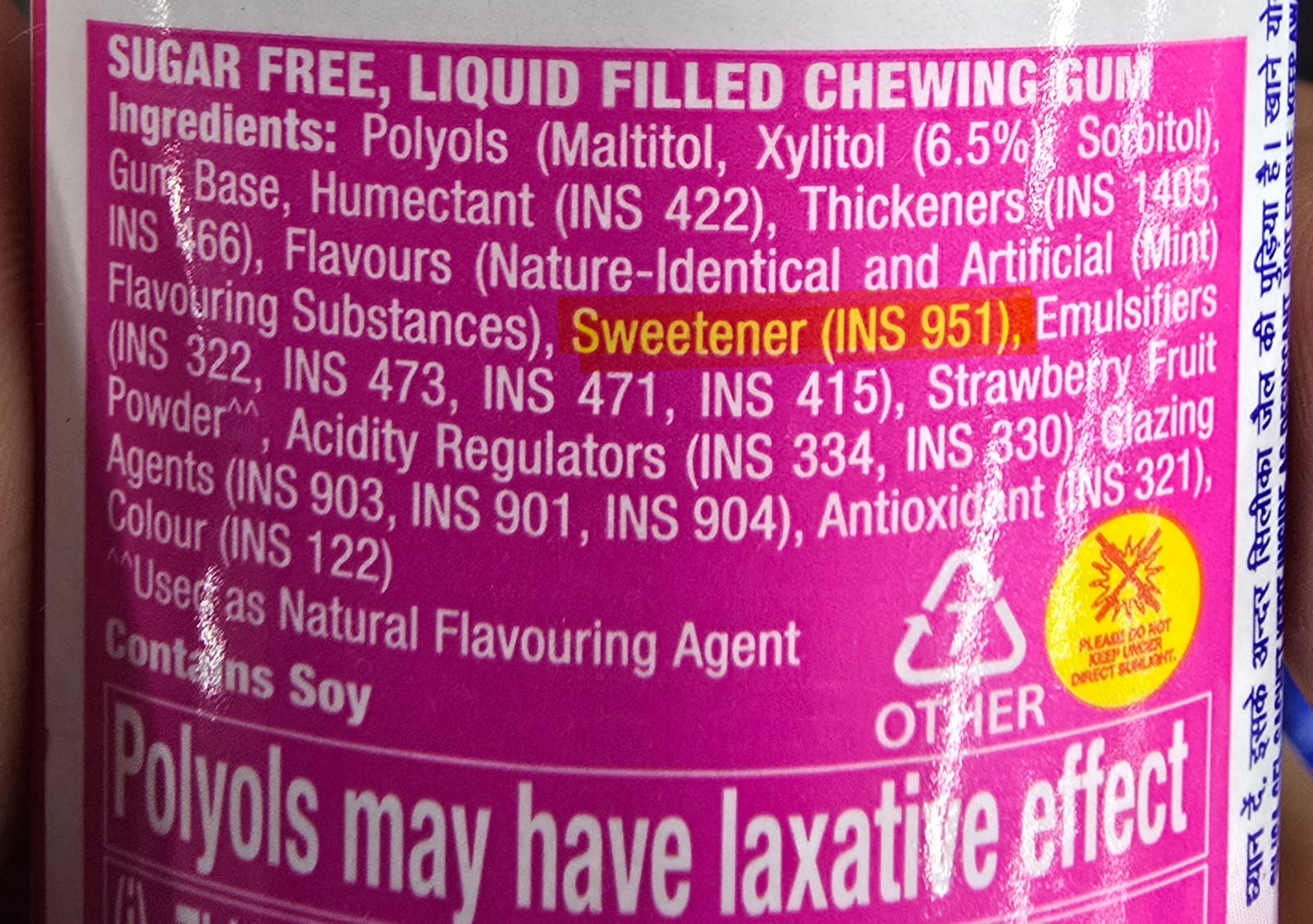
Image source: reader submissions
Regulatory Approval.
1. Food and drug administration (fDA – USA)
Status |
Usage Limit |
|---|---|
|
Approved (GRAS under Good Manufacturing Practice) |
Used in food consistent with Good Manufacturing Practice; no specific numerical limit beyond GMP. |
2. European Food Safety authority (eFSA)
Status |
Usage Limit |
|---|---|
|
Approved |
Average Daily intake(ADI): 40 mg/kg body weight per day. not revised after re-evaluation and typical intakes are below this limit. |
3. Food safety and standardization authority India (FSSAI)
Status |
Usage Limit |
|---|---|
|
Approved (subject to conditions and labeling requirements) |
Permitted in specific food categories with maximum use levels, typically expressed in mg/kg or mg/L in the FSSAI Schedule of Sweeteners |
Health concerns
- EFSA confirms current scientific evidence does not indicate safety concerns at typical exposure levels below the ADI; however, individuals with phenylketonuria (PKU) must avoid aspartame because it releases phenylalanine.
- EFSA notes the ADI does not apply to PKU patients because they need a low-phenylalanine diet.
- Cancer headlines vs risk: In 2023, IARC classified aspartame as “possibly carcinogenic” (Group 2B) based on limited evidence, but WHO/JECFA concluded the evidence was not convincing and did not change the existing average daily intake (ADI).
- The main practical concern is high cumulative intake from multiple sugar-free products (especially beverages).
Conclusions
Aspartame (E951) is a widely approved sweetener and considered safe for most people when kept within the ADI (0–40 mg/kg body weight). The key caution is for individuals with phenylketonuria (PKU); for everyone else, the focus is simply not overconsuming products with aspartame and following the regulatory limits.
Note: IARC evaluates hazard from different ingredients, not dietary risk; intake safety is set by the WHO/JECFA.